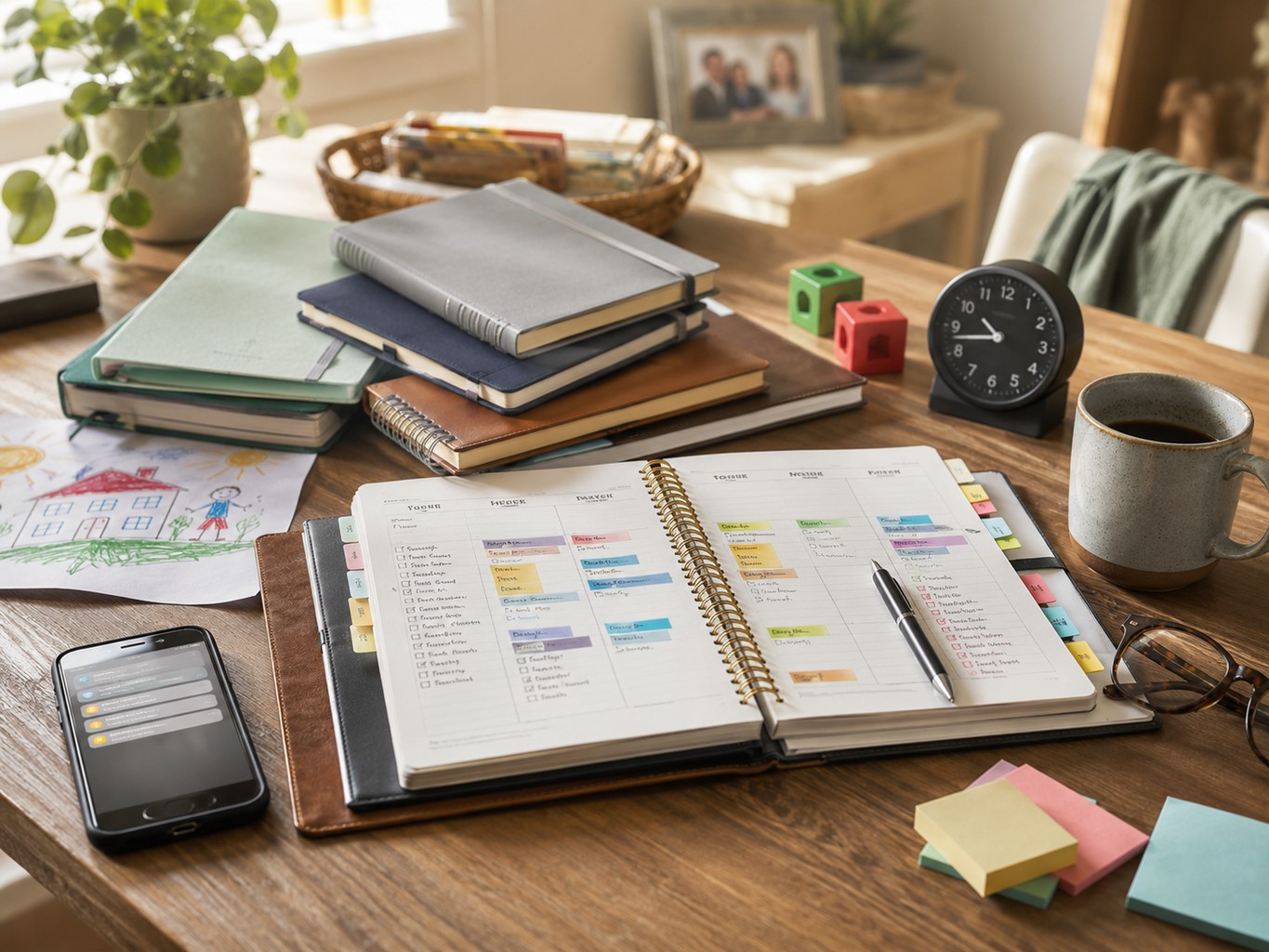
If you are looking for the best planners for ADHD dads, you probably do not need another productivity lecture. You need something that helps you remember the pediatrician call, the school form, the grocery run, and the fact that your kid needed a blue shirt today, not tomorrow. A good planner is not about becoming perfectly organized. It is about lowering the daily chaos enough that you can show up with less stress and fewer dropped balls.
That matters even more when you are carrying work, parenting, household logistics, and your own ADHD at the same time. A planner can help, but only if it fits how your brain already works. The wrong one becomes one more guilt object on the counter.
What makes the best planners for ADHD dads actually useful
Most planners are built for people who like planning for its own sake. That is not usually the issue for ADHD dads. The issue is follow-through, visibility, friction, and overload. You may buy a beautiful planner and abandon it in three days because it asks too much of you before it gives anything back.
The best planner usually has three traits. First, it is fast to use. If it takes ten minutes to set up your day, you are more likely to avoid it. Second, it keeps the right information visible. Out of sight is often out of mind, especially when you are bouncing between school emails, work deadlines, and family tasks. Third, it is forgiving. Miss a day, miss a week, scribble in it, use it imperfectly. A planner that punishes inconsistency will not last long in a real family home.
That means the best option is not always the most detailed one. Sometimes the right planner is a basic weekly layout with enough room for appointments, to-dos, and one or two must-do tasks. Sometimes it is digital because your phone is the only thing that stays with you. It depends on whether you need fewer distractions, stronger reminders, or a better way to see the week at a glance.
Paper or digital for ADHD dads?
This is where a lot of advice gets too rigid. Paper planners reduce screen distraction and can make your week feel more concrete. You can leave one open on the kitchen counter and catch important details as you walk by. That physical visibility helps many ADHD brains.
Digital planners win on reminders, recurring tasks, and portability. If your planner stays at home while your life happens elsewhere, paper may fail you no matter how good it looks. A digital system also makes it easier to share schedules with a partner, which matters if your household already runs on coordination.
For a lot of dads, the sweet spot is hybrid. Use a digital calendar for appointments and alarms, then a paper planner for your daily focus and family logistics. That gives you backup without forcing one tool to do everything.
9 best planners for ADHD dads
1. A simple weekly paper planner
For many dads, this is the best place to start. A weekly spread lets you see school events, work meetings, pickup times, and family obligations in one glance. That reduces the mental strain of holding the whole week in your head.
Look for one with a clean layout, enough writing space, and no extra goal-tracking fluff. If every page asks for affirmations, priorities, meal plans, habit scores, and personal reflections, it can become noise. Simple is often stronger.
2. A daily planner with timed blocks
If time blindness is your biggest problem, a daily planner may help more than a weekly one. Seeing the day broken into chunks can make it easier to estimate what fits and what does not. It also helps with transition points, which are often where things fall apart.
The trade-off is maintenance. Daily planners ask more from you. If writing out each day feels like a burden, you may stop using it fast. This one works best for dads who need structure during work hours and can handle a little setup.
3. A disc-bound planner you can customize
This is a strong option if standard planners never quite fit your life. Disc-bound systems let you add, remove, and rearrange pages. You can build sections for work, school communication, household tasks, and notes from doctor appointments.
That flexibility is useful, but there is a catch. Customization can turn into procrastination. If you enjoy building systems more than using them, you may spend more time tweaking the planner than relying on it.
4. A dry erase wall planner for the family
This is not a personal planner in the usual sense, but it can be a game changer in a busy house. A wall planner puts the week or month where everyone can see it. That reduces the hidden load on one parent trying to remember everything.
It works especially well for dads who need visual cues and benefit from repeated exposure. The downside is that it does not travel with you, so it works best as a home base, not a full system.
5. A digital calendar with aggressive reminders
If appointments are the main thing you miss, a digital calendar may be your best planner. Set multiple reminders. One the day before, one an hour before, one when it is time to leave. That is not overkill if it prevents a missed school meeting or therapy session.
This setup is especially helpful for dads juggling co-parenting schedules, rotating work shifts, or multiple kids with different needs. It is less useful for brain-dump thinking and handwritten task capture, but excellent for not losing track of time-sensitive commitments.
6. A task app with today, next, and later views
Some ADHD dads do better with task lists than traditional planners. If dates overwhelm you, a task app that sorts by urgency can reduce paralysis. Today, next, and later is often easier to manage than one giant list that never ends.
Just keep it lean. Too many tags, categories, and smart filters can become another rabbit hole. The system should help you decide what to do now, not give you ten new ways to organize avoidance.
7. A notebook-based bullet journal, but stripped down
The bullet journal method can work very well for ADHD, but only if you ignore the fancy internet version. You do not need artistic spreads or elaborate trackers. A plain notebook with a monthly page, weekly page, and rapid task logging is enough.
This works because it is flexible and forgiving. You can restart anytime without wasting pages or feeling like you failed the system. For dads who hate pre-made layouts, that freedom is valuable.
8. A planner with dedicated family sections
Some planners include spaces for meals, errands, kids' activities, or family priorities. For dads trying to balance home and work, that can make the planner feel more relevant to actual life rather than abstract productivity.
Still, more sections are only helpful if you use them. If extra pages become clutter, they will not support you. Choose family-focused features that solve real problems you already have.
9. A pocket planner for quick capture
If ideas, tasks, and reminders vanish the second they show up, a pocket planner can earn its place. It is not a full command center, but it is great for catching things before they disappear. Write it down at the school pickup line, in the parking lot, or between meetings.
This works best paired with a larger weekly review. Otherwise, the notes stay trapped in a small notebook and never become action.
How to choose the best planners for ADHD dads
Start with the failure point, not the fantasy. If your problem is missed appointments, choose reminders first. If your problem is daily overwhelm, choose visibility and simplicity. If your problem is carrying too much family information in your head, choose a planner that supports shared routines.
Also be honest about where you will use it. On your desk is not enough if most of your family management happens in the car or on your phone. In your pocket is not enough if you need a big visual overview at home. Match the tool to the environment.
One more thing matters here, and it gets overlooked. Shame kills consistency. If a planner makes you feel behind every time you open it, you will avoid it. The best system is the one you can return to after a rough week without feeling judged by the page.
A few setup rules that matter more than the planner itself
Keep one main calendar. If appointments live in three places, something will get missed. Use one trusted place for anything with a date and time.
Reduce the number of daily priorities. Three meaningful tasks beat a ten-item list you cannot start. ADHD often turns long lists into static.
Build a reset habit. Five minutes each evening or ten minutes on Sunday can keep your system from collapsing. At Divergent Dads, that kind of low-pressure routine matters more than chasing perfect consistency.
And if you have a partner, make the planner visible enough to support teamwork. Planning should reduce friction at home, not become another isolated system that only exists in your head.
The right planner will not turn fatherhood into a neat little checklist. But it can give your brain fewer chances to drop what matters, and that is often enough to make the week feel more manageable, more connected, and a little less heavy.